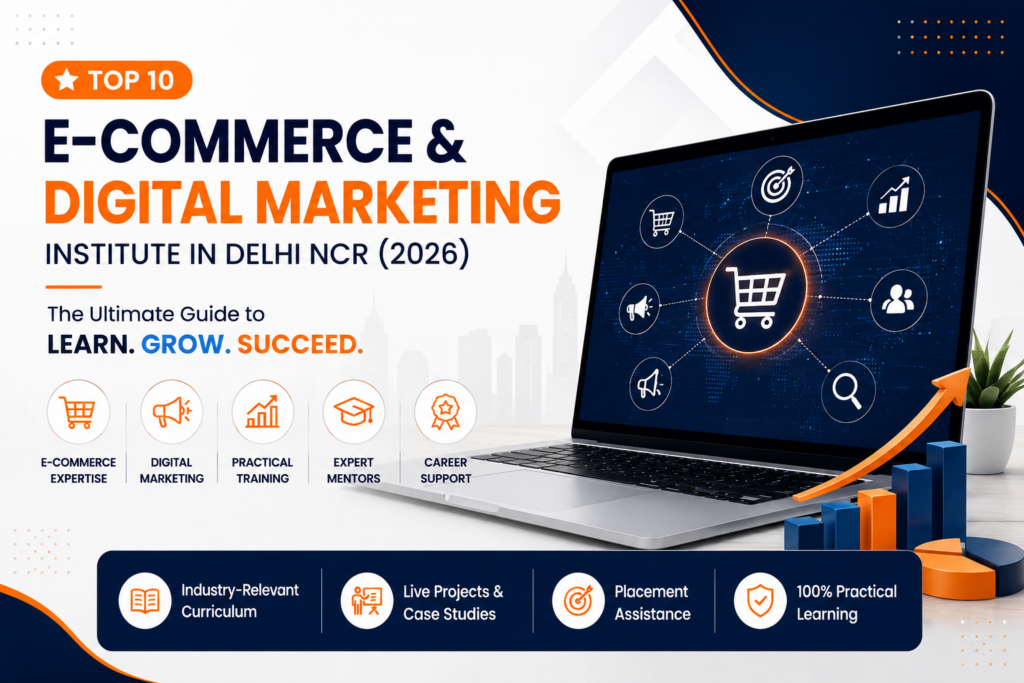


A few years ago, a B2B marketer’s week looked pretty predictable. Pull reports on Monday, tweak ads on Tuesday, argue with sales about lead quality on Wednesday. Now half of that work happens on its own, and the people who still do it by hand are falling behind.
If you’re looking at an e commerce marketing course right now, this shift matters more than the syllabus. A course can teach you the buttons. What you really need is to understand how the buttons changed.
What Changed in B2B and e commerce Marketing
B2B buyers don’t wait for your sales call anymore. They search, read reviews, check your pricing page and ask peers on LinkedIn, all before they fill in a form. By the time someone talks to your team, they’ve already half decided.
That puts pressure on marketing. You need to be visible at every step, and you can’t do that by hand when you’re running ads on three platforms and sending emails to five segments.
This is where automation stepped in. Ad platforms now make thousands of small decisions per hour. Your CRM tells you who’s likely to buy. Software drafts your first email. The grunt work shrank, and the thinking part grew.
Lead Scoring and Targeting
Here’s a problem every B2B team knows. Marketing sends 200 leads, sales calls 30 of them, and 5 are real. Everyone’s annoyed.
Modern tools look at what a person actually did. Did they read the pricing page twice? Open three emails? Download the comparison sheet? Those signals get turned into a score, and sales calls the top of the list first.
It’s not magic, and it isn’t always right. But it beats gut feeling by a wide margin.
Writing and Personalisation
Say you sell software to logistics firms and also to hospitals. Sending them the same email makes no sense, but writing two hundred versions by hand is unrealistic.
Writing tools now handle the first pass. You give it the audience and the pain point, and you get a rough draft in seconds. Then you fix it. That second step is the one people skip, and you can usually tell when they did. The email reads like it was written by nobody.
Use the tool for speed. Keep your own voice for the final version.
Google Ads Marketing
Google Ads marketing used to be about picking keywords and setting bids yourself. Now much of that is handled by smart bidding and Performance Max campaigns, where Google decides placements and audiences based on your goal.
Sounds easy, right? It isn’t. The system is only as good as the data you give it. If your conversion tracking is broken, the platform will happily spend your budget chasing the wrong people.
So the skill has moved. You’re not pulling levers anymore. You’re setting up tracking properly, writing ads worth clicking and knowing when the system is going off track. Any e commerce marketing course worth your money should spend real time on this.
Performance Marketing
Performance marketing means you care about results you can measure: leads, sales, cost per acquisition. Nobody pays for “awareness” without asking what it did.
What’s new is forecasting. Tools can now estimate which campaigns will keep working and which are about to slow down. That lets you move budget before the numbers drop, not after.
But there’s a catch. More data doesn’t mean better decisions. I’ve seen people stare at dashboards for an hour and still not know what to change. Learning what to ignore is half the job.
Amazon PPC Ads
People often forget that B2B sellers use Amazon too, whether it’s office supplies, industrial parts or software tools. Amazon PPC ads work on bids, keywords and placements, and automation now handles a lot of it.
The auto campaigns are fine for finding keywords. But if you leave them alone, they’ll waste money on search terms that never convert. You still need to go through the search term report, add negatives and push budget toward what sells.
Sellers who understand the structure behind Amazon PPC ads spend less and earn more. Sellers who just press “automatic” and wait usually complain that ads don’t work.
Meta Ads Training
Meta has pushed hard toward automated campaigns. You give it a goal, some creatives and a budget, and it finds the audience. Targeting by hand matters less than it used to.
What matters now is creative. Different hooks, different formats, different offers. Whoever tests more variations usually wins. That’s why good meta ads training focuses on how to build and test creatives, not just how to click through Ads Manager.
What a Good E commerce Marketing Course Covers
Plenty of courses still teach 2019 tactics with a fresh coat of paint. Before you enrol in any e commerce marketing course, check a few things.
- Do you get to run real campaigns, or only watch videos?
- Does it cover Google Ads marketing, Meta ads and Amazon PPC ads in separate, detailed modules?
- Is performance marketing taught with real numbers like ROAS and cost per lead?
- Are the trainers people who actually run ads for a living?
- Was the material updated in the last year?
That last point is bigger than it sounds. Ad platforms change their layouts and features constantly, and old screenshots will confuse you.
Also ask about projects. Employers and clients care far more about a campaign you ran than a certificate you hold.
Where Things Still Go Wrong
Automation isn’t a cure for everything. A few problems keep showing up.
Bad data ruins good tools. If your tracking is off, every decision built on it is off too.
Generic content is everywhere. When everyone uses the same tools with the same prompts, everything starts to sound alike. Your brand’s voice is the one thing that can’t be copied.
Over-automation hurts relationships. B2B deals are built on trust. A buyer who wants to talk to a person and gets stuck with a bot will notice.
Privacy matters too. You can’t collect and use data however you like, so know the rules for the regions you sell in.
FAQs
What is an e commerce marketing course?
It’s a training program that teaches you to promote and sell products online. Most cover paid ads, SEO, email, analytics and marketplaces like Amazon. A good e commerce marketing course also gets you running live campaigns.
How is AI changing B2B marketing?
It’s taking over repetitive jobs like reporting, lead scoring, bidding and first drafts. Marketers spend less time on manual work and more on strategy, testing and messaging.
Do I need Google Ads marketing skills for B2B?
Yes, in most cases. Google Ads marketing puts you in front of people who are already searching for what you sell, which is hard to beat. Even with automation, you need to understand budgets, targeting and tracking.
What is performance marketing?
You pay for results rather than exposure. That could be clicks, leads, sign-ups or sales. Everything is tracked, so you can see exactly what each rupee or dollar earned.
Are Amazon PPC ads useful for B2B sellers?
They are if your buyers shop on Amazon. Business supplies, tools and equipment sell well there. You’ll need to learn keyword research and how to read the search term report.
Why should I take meta ads training?
Because Meta’s ad system changes often, and guessing is expensive. Proper meta ads training shows you how to structure campaigns, test creatives and track results.
Will AI replace digital marketers?
Not the good ones. It replaces repetitive tasks. Judgment, creativity and understanding customers still need a person. Marketers who learn the tools will simply get more done than those who don’t.
How do I choose the right e commerce marketing course?
Look at the trainers, the practical work and how recent the content is. A solid e commerce marketing course should cover Google Ads, Meta ads, Amazon PPC and analytics, and let you build a portfolio.
Conclusion
B2B marketing hasn’t become easier. It’s become different. The routine tasks are shrinking, and the skills that remain are judgment, testing and knowing your buyer.
If you want to work in this field, pick an e commerce marketing course that makes you run real campaigns across Google, Meta and Amazon. Learn performance marketing properly, understand how each platform makes its decisions and keep your own voice in everything you publish.